
The Auction Was Over Before You Opened Your Phone
Your most valuable exchange each morning isn’t money.

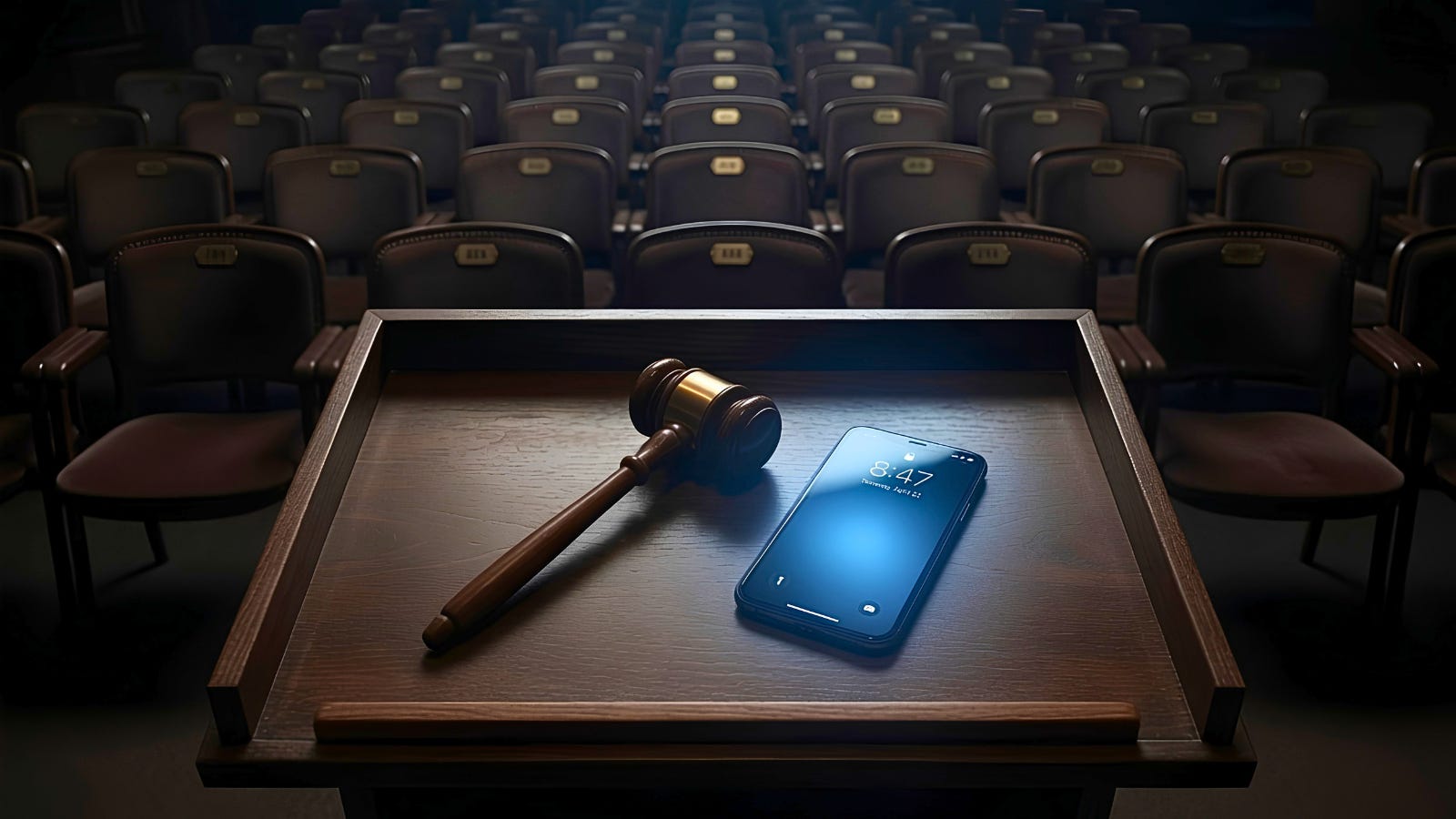
Before the screen finishes lighting up, a market has already opened, run, and closed. Buyers you’ve never met placed bids on the next few seconds of your attention. One of them won. You didn’t get a vote. You got the app.
The whole thing settles faster than you can read this sentence.
You were in a market. Nobody told you.
We’re used to thinking of attention as something we lose. We get distracted. We waste time. We tell ourselves we need more discipline, a better morning routine, an app that blocks the other apps. That story puts the whole problem inside you: your willpower, your focus, your habits.
That story is easier to accept. It’s also wrong about where the problem lies.
You are not losing your attention. You are selling it, thousands of times a day, at a price you never set, to buyers you’ve never named.
You’ve already felt what this costs your day. That was in a previous article: the day didn’t get shorter; it got sliced into pieces. The part you haven’t seen is what you hand over in exchange and who is collecting it.
Let me show you the market. Once you can see it, you can stand inside it.
What Happens Before You See Anything
Here’s what happens when a feed refreshes or a page loads. In the fraction of a second before you see anything, an automatic auction runs in the background. On one side is a slot of your attention: the next thing your eyes will land on. On the other side are buyers, bidding for the right to fill it. The highest bid wins; the post or the ad appears, and it clears before your brain registers a choice was made.
The unit being sold is tiny. Smaller than a sentence. A glance. A half-second.
Why so small? Because a small unit is a cheap unit, and a cheap unit is one you’ll never fight for. No one guards half a second.
Know Them by Name
So who’s bidding? Three buyers show up in almost every auction. It helps to know them by name.
The platform. It pays you in novelty, something new right now, every time you look. In return it takes the habit itself: the reflex to reach for the phone before you’ve decided to. You already know this one. Courtrooms are full of arguments over how deliberately these products were built to be habit-forming. You don’t need a verdict to settle it. Open your screen-time number and look at this week. Or don’t—look at today; it’s easier to admit.
The advertiser. It pays for the “free” you enjoy: the free video, the free article, the free tool. In return, it takes a slice of your next decision. Search once for a mattress, and it follows you for two weeks. You had already decided that purchase was large enough to put off for a few years—the advertiser did not accept your decision. It kept bidding until you reconsidered.
The answer engine. This is the newest buyer, and the most expensive. It pays you in speed. Ask a question, get a finished answer, skip the reading. In return, it takes the reading itself, the slow middle where you’d have weighed one source against another and formed your own judgment. Pew Research found that when an AI summary sits at the top of a search, people click through to the actual sources less often.1 The summary arrives, and the reading stops there.
The platform takes a habit. The advertiser takes a purchase. The third takes the faculty that produces both.
The Buyer That Flatters You
Most people still use that third tool like a search box. That’s the mistake. A search box has no opinion about you. This one does, and its opinion is that you’re right.
It’s built to please. It agrees, it compliments, it encourages the direction you were already leaning. A buyer who flatters you is still a buyer.
I’ve had one refuse a draft of mine as divisive when the piece argued the opposite. I knew the subject. I had the evidence. The refusal was wrong, and I was the only one in the room in a position to know it.
So push back. Bring what you know and what you can show. Your own experience doesn’t leave the equation because something answered fast.
What They’re Actually After
Now look at what all three buyers have in common. None of them are after your time. That was the older problem. What they take is smaller and worth more: the moment where judgment forms.
A decision has a beginning. There’s a half-second where you notice, weigh, and choose. When the unit of attention is smaller than that half-second, the auction clears before you ever arrive. You never become a party to the transaction. You just live with the result.
Multiply that by a thousand small settlements a day.
When the Budget Starts Running You
Convenience becomes condition. Condition becomes conditioning. And conditioning is training you never signed up for.
You’ve watched this happen with money. You set a budget. Then autopay, a subscription you forgot, a default you never revisited, and one day you look up, and the budget is running you. Attention works the same way, only faster, and nobody mails you a statement.
That is the mechanism, and it operates downstream. A citizen who cannot hold a thought long enough to weigh it cannot hold authority accountable. Discipline is a skill, and it begins at the very spot the auction is built to skip: the moment you decide for yourself.
Take Inventory
Scripture named the discipline long before there was a feed to sell.
“Be thou diligent to know the state of thy flocks, and look well to thy herds.” Proverbs 27:23
Know what you own. Watch it closely. Your attention is the flock. The auction is counting on you never taking inventory.
Most people try to fix this by installing something. A blocker, a timer, a limit that shuts the app at nine.
I’ve done it. The trouble is that a blocker holds a line it never drew. You’ve hired a tool to enforce a standard you didn’t set, which is the same trade as everything else in this article. One more decision handed off. A block on the calendar works the same way. It holds only as long as you’ve decided what it’s for. Otherwise there’s always something else, and the something else is always a priority.
Set Your Price, First
So what does a diligent owner do? You don’t leave the market. I’m in it every day, and so are you. You learn to stand in it as a literate party rather than silent inventory. Three practices. None of them aimed at a single buyer, because all three bid the same way.
1. Read the receipt.
Every free thing hands you a receipt with the price printed on the back. Before you accept, name the bidder and the bid: who is buying this slice of me, and what are they carrying off for it? You won’t always decline. But you’ll know you paid.
2. Set a reserve price.
An auction with no floor clears at zero. So set one now, while nothing is bidding. What’s your bottom line? Nothing gets the first 30 minutes. The feed stays closed until you’ve made one real decision of your own. What you do not intentionally oversee has a way of drifting, and rarely in a direction you’d have chosen. That’s the whole point of the verse. A flock left uncounted doesn’t hold still. It wanders.
3. Become the buyer.
Switch sides of the table. He who holds the gold makes the rules, and in this market the gold is your attention. Spend it on purpose: the proposal you thought through yourself, the client call you take without a summary in front of you, the book nobody condensed for you. Inventory gets auctioned. A buyer sets the terms.
Staying online is fine. I do it every day, on purpose. What matters is consent: knowing the trade and agreeing to it. There is a version of you that moves through the day as inventory, sold off in pieces too small to notice. And there is a version that knows the market is running, knows the bidders by name, and decides—slice by slice—what it will and won’t sell.
The second one is the author. The first one just signed, without ever reading a line.
So don’t wait for the next screen to light up. You know the bidders now, and you know what each one carries off. Decide tonight what tomorrow’s attention is for, and set your price before the bidding opens.
The buyers will show up either way. Meet them with your terms already set.
Ready for the next step? Take the free AI Archetype™ assessment to start engaging with AI on your terms.
Footnotes
“Google users are less likely to click on links when an AI summary appears in the results,” Pew Research Center, July 22, 2025. https://www.pewresearch.org/short-reads/2025/07/22/google-users-are-less-likely-to-click-on-links-when-an-ai-summary-appears-in-the-results/